Concrete Countertops vs. Granite, Quartz & Laminate: Which Is Right for Your Central Texas Home?
How custom GFRC concrete countertops compare to granite, quartz, and laminate on looks, durability, and cost in Central Texas.
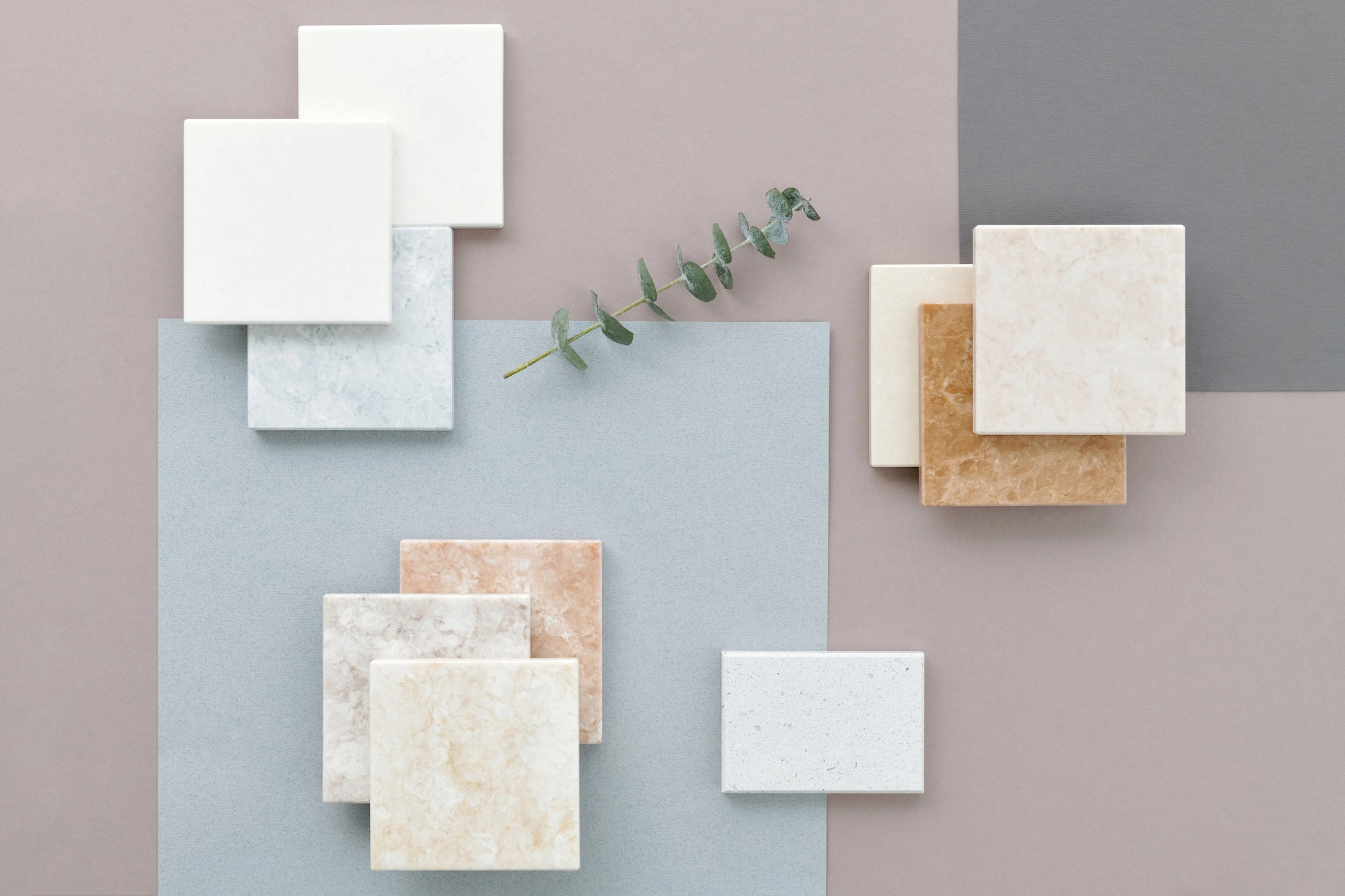

If you're weighing concrete countertops against granite, quartz, or laminate for a kitchen or bathroom in Central Texas, the short answer is this: concrete offers a level of custom color, shape, and edge design the other three can't match, and it lands in a similar price range to quartz. It's the right choice for homeowners who want a countertop that looks like nothing else on their block and don't mind a material that shows its age a little differently than stone.
What are GFRC concrete countertops?
Most concrete countertops built today, including the ones Kennedy's makes, use GFRC, or glass fiber reinforced concrete, rather than a slab poured directly on site. GFRC panels are cast by hand in a shop, reinforced with 3/4-inch fiberglass strands mixed through the concrete instead of steel rebar, and cured under controlled conditions before installation. That process allows for thinner profiles, lighter weight, and edge details that would crack in a traditional poured slab. Pigment gets mixed directly into the concrete, so the color runs all the way through the piece instead of sitting on the surface.
How does concrete compare to granite, quartz, and laminate?
Granite is a natural stone, quarried and cut into slabs. It's extremely durable and heat resistant, and each slab is genuinely one of a kind because it's a product of geology rather than a factory line. The tradeoff is a limited color and pattern range. You're choosing from what nature produced, not designing from scratch.
Quartz is engineered stone, made from crushed quartz mixed with resin. It's nonporous and low maintenance, and it stays consistent from slab to slab, which some homeowners prefer and others find a little flat compared to a natural or handmade material. Quartz and concrete tend to land in a similar price bracket in Central Texas.
Laminate is the budget option. It holds up fine for a rental or a quick flip, but it scratches, chips at the edges, and can't be repaired the way stone or concrete can. It's rarely the right call for a forever home.
Concrete sits apart from all three because it's built, not selected off a slab yard shelf. You choose the pigment, the edge profile, whether the surface is polished smooth or left with visible texture, and whether it includes inlays like shells, glass, or metal. No two Kennedy's countertops come out the same, because each one is hand finished rather than cut from a factory run.
.png)
.png)
At a glance
- Fully custom color, edge, and shape: Concrete yes. Quartz partial. Granite and laminate no.
- One-of-a-kind piece: Concrete and granite yes. Quartz and laminate no.
- Heat and scratch resistant: Concrete, granite, and quartz yes. Laminate no.
- Needs periodic resealing: Granite yes. Concrete (GFRC), quartz, and laminate no.
- Typical price tier: Concrete mid to high. Granite mid to high. Quartz mid. Laminate budget.
Pros and cons of concrete countertops
The advantages are real. No two countertops come out identical, and you control the pigment, the edge profile, and the finish from the first design conversation. Over time, the surface develops character rather than simply wearing out, which many homeowners come to like. The tradeoffs deserve equal honesty. Concrete can develop hairline cracks over time, particularly in poorly cured or under-reinforced work, though proper GFRC construction reduces that risk significantly compared to poured-in-place slabs. The surface can also show minor patina and color variation with use. Some homeowners find that appealing. Others expect a surface that looks factory new for decades, and concrete isn't that material.
How much do concrete countertops cost in Central Texas?
Concrete countertops typically run above laminate, comparable to or slightly above quartz, and often below high-end exotic granite. Final pricing depends on square footage, edge complexity, color and inlay choices, and whether the piece needs an integrated sink or drainboard. Because every countertop is custom cast, an accurate quote requires seeing the space and reviewing the design rather than applying a flat per-square-foot number.
Care, sealing, and longevity
This is where concrete differs most from what people assume. A properly finished GFRC countertop is sealed once, during fabrication, before it ever reaches your home. That single sealing step is what makes the surface resistant to stains, water, and everyday kitchen use. There's no yearly resealing schedule to maintain and no ongoing treatment required to protect the investment. Day to day care stays simple: wipe up spills, use a cutting board for hot pans and sharp knives, and clean the surface the way you'd clean any other counter. Treated this way, a concrete countertop holds up for decades.
Frequently asked questions
Are concrete countertops worth it?
For homeowners who want a fully custom look and don't mind a material with visible character, yes. They cost roughly what quartz costs and offer design flexibility neither quartz nor granite can match.
Do concrete countertops crack?
Hairline cracking can happen, especially in poorly built poured-in-place slabs. GFRC construction, reinforced with 3/4-inch fiberglass strands and cast under controlled shop conditions, greatly reduces that risk.
Do concrete countertops need to be resealed?
No. A correctly fabricated GFRC countertop is sealed once during production, and that seal is built to last. There's no recurring resealing required.
How long do concrete countertops last?
With normal care, decades. The material doesn't wear out the way laminate does, and it doesn't require the ongoing upkeep some homeowners assume it does.
If you're planning a kitchen or bath project and want to see what a custom concrete countertop looks like in person, Kennedy's hand-builds every piece in the Bastrop shop. Reach out for a free estimate, and we'll walk through color, edge, and layout options for your space.